
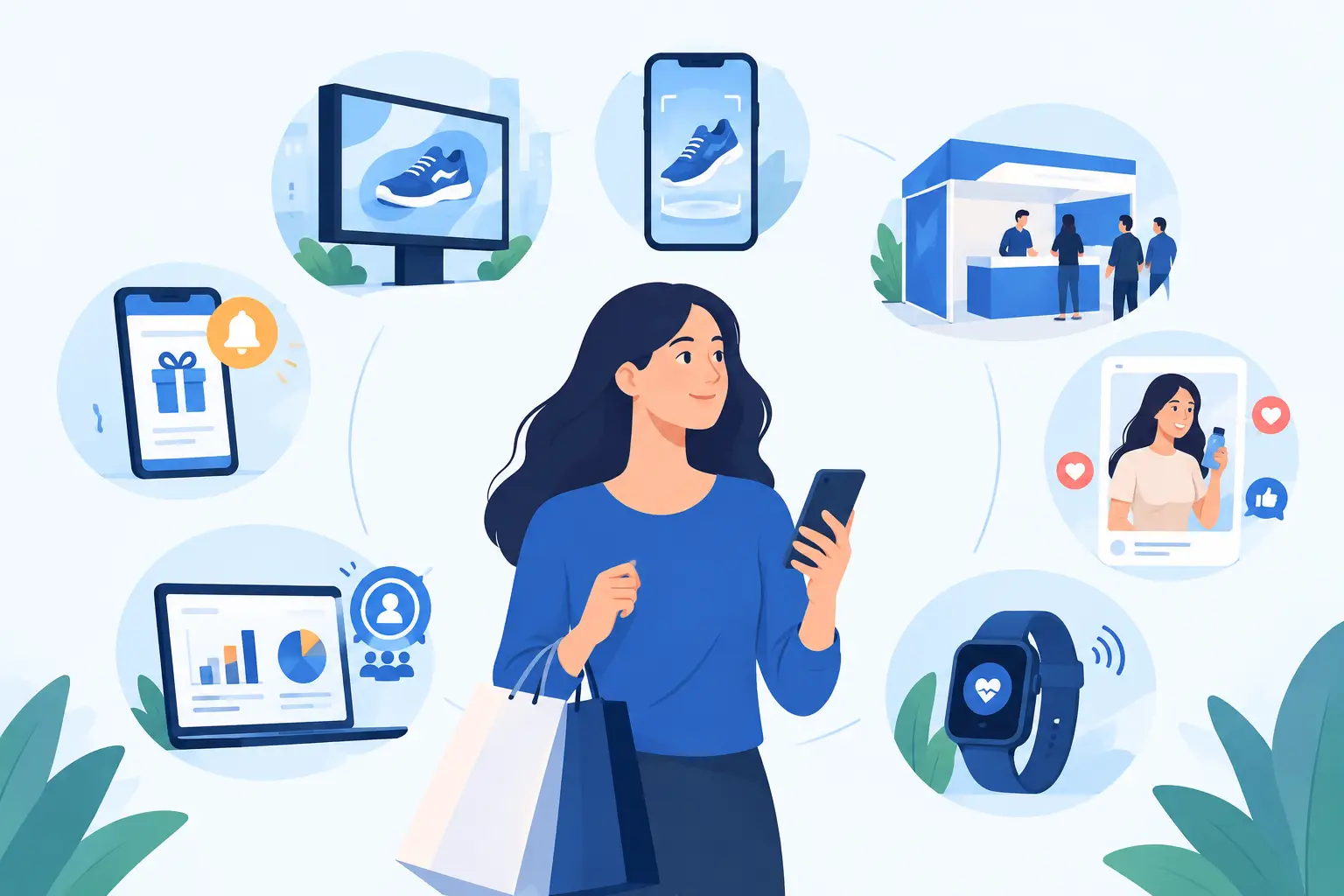
Explore practical brand activation technology for events in Dubai and the UAE, including RFID, interactive screens, sensors, gamification and smart check-in.
A guest has only a few seconds to decide whether an activation is worth their time. A queue that does not move, a screen that fails to respond, or a complicated sign-up process can turn a strong creative idea into a missed brand moment.
From exhibition stands and product launches to conferences, retail experiences and public activations across Dubai, Abu Dhabi and the UAE, the best event technology does more than look impressive. It removes friction, encourages participation and gives brands a reliable way to understand what happened during the experience.
At Eventro, we approach activation technology by starting with the action you want the guest to take. That could be registering, tapping, playing, moving, sharing, exploring a product or interacting with a physical object. The technology should support that experience rather than becoming a complication of its own.
1. RFID and NFC Experiences That Recognize the Guest
RFID and NFC can turn a standard wristband, card or badge into an interaction tool. At an exhibition stand, guests can tap to register interest, collect digital product information, enter a giveaway or trigger personalized content on a screen.
At larger events, the same credential can also support access control while recording engagement across different zones or experiences.
The main advantage is simplicity. Instead of repeatedly asking visitors to enter their details, one tap can connect the guest with an interaction that has already been linked to their profile.
RFID works particularly well when there are multiple touchpoints throughout an experience. For a single quick interaction, a QR code may be a simpler and more cost-effective option.
2. Interactive Screens With a Clear Reason to Participate
Touchscreens, LED walls, kiosks and tablet-based experiences are among the most flexible tools for interactive events because the experience can be designed around almost any campaign objective.
A beauty brand could create a personalized product finder. An automotive company might use a touchscreen configurator. A conference sponsor could run an interactive poll connected to a large LED screen. A retail brand could build a product discovery experience that recommends items based on a few simple selections.
The important part is giving people a reason to participate. Asking a guest to browse a digital catalogue rarely creates much engagement. Asking them three questions and giving them a personalized recommendation, result, prize or visual response creates a much clearer interaction.
Event conditions also matter. Bright venues affect screen visibility, high visitor volume affects interface design, and long experiences create queues. A good event interface should have a clear starting point, a short interaction path and an obvious result.
Eventro develops custom interactive event experiences combining software, touchscreens, sensors, physical controls and large-format displays.
3. AI Photo and Video Experiences Designed for Sharing
A photo booth can be as simple as a branded backdrop, but interactive technology can turn it into a much more memorable part of the event.
AI-powered portraits, motion-controlled video, slow-motion capture, virtual backgrounds and instant branded delivery allow brands to create content guests genuinely want to keep and share.
For a retail launch, guests might receive a personalized campaign-style image. A sports activation could generate a player-introduction-style video. At a corporate event, an AI portrait experience could create polished attendee images with subtle event branding.
The experience does not end when the image is captured. The delivery workflow is equally important. Guests expect to receive their content quickly through a QR code, email or other digital delivery method.
The system also needs to consider consent, branded templates, approval workflows and peak usage when many guests participate at the same time.
Explore our photo and video activation solutions .
4. Sensor-Based Activations That Turn Movement Into Interaction
Sensors create a direct connection between something happening in the physical world and a digital response.
Motion sensors, proximity sensors, pressure pads, gesture controls, infrared sensors and connected physical objects can turn a passive installation into an interactive experience.
For example, a sustainability activation could change a live visualization whenever an item is placed in the correct recycling area. A fitness campaign could use movement to control an LED animation. A visitor approaching a display could trigger video, lighting, sound or personalized content automatically.
Eventro also develops experiences where physical movement and controls communicate with screens, LED walls and interactive software in real time. This can include gestures, physical buttons, sensors or other inputs depending on the creative concept.
Sensor-based experiences are particularly effective when the campaign story involves action, transformation, discovery or performance because the guest becomes part of what is happening on screen.
They do, however, require proper testing. Sensor position, lighting, visitor flow, venue conditions and physical installation can affect performance. On-site calibration and a fallback interaction method should always be considered during planning.
Learn more about our sensor and custom interactive solutions .
5. Gamified Lead Capture Without Slowing Down the Queue
Gamification can make data collection feel like part of the experience rather than a form visitors are being forced to complete.
Digital scratch cards, reaction games, quizzes, prize wheels, voting experiences, memory games, leaderboards and team challenges can all encourage participation while collecting useful information through a short registration process.
The game should support the campaign objective. If a brand is launching a product, a quiz could introduce its key features. If the objective is attracting visitors to an exhibition stand, a leaderboard or timed challenge can create visible activity around the space.
If lead generation is the objective, the experience can finish with a personalized result and an option for the visitor to request more information.
One common mistake is focusing entirely on the game while forgetting the business result. A busy exhibition stand is not automatically a successful activation if the brand cannot understand who participated or what interested them.
Registration should therefore be integrated naturally into the experience and kept as short as possible.
6. Smart Registration and Check-In That Starts the Experience Early
Registration is often treated purely as an operational requirement, but it is actually one of the first digital interactions a guest has with an event.
A branded registration journey can begin before the visitor reaches the venue and continue through QR confirmation, check-in, badge printing and access management.
Depending on the event, the system can include:
Online event registration
RSVP management
Unique QR code confirmations
Email and WhatsApp confirmations
Self-service check-in kiosks
Staff-operated check-in stations
On-site registration
Real-time badge printing
VIP and access-level management
Attendance dashboards and reporting
For a conference, badges can include personalized information and different access levels. For a VIP event, the system can help the hosting team identify arrivals. At exhibitions and large public events, live attendance information can help organizers understand peak entry periods and allocate staff accordingly.
From the guest's point of view, the goal is simple: check-in should feel effortless. Behind the scenes, the system needs accurate data, reliable hardware and clear processes for walk-ins, duplicates, badge reprints and name changes.
Eventro provides event registration, check-in and guest management solutions for events across the UAE.
7. Live Data Walls That Turn Participation Into Momentum
A live data wall makes audience participation visible to everyone in the space.
It could display poll results, attendee choices, competition scores, event milestones, social submissions, donation totals or other real-time information.
Seeing a screen respond immediately to participation encourages other visitors to join. The audience can see that their action has a visible effect rather than disappearing into a database.
At a conference, a large display could visualize audience voting. At a public event, it could show where visitors have travelled from. A brand activation could gradually create a digital artwork using hundreds of participant inputs.
Good visualization is as important as the underlying technology. The content must be readable from a distance, updates should feel smooth, and public submissions may require moderation before appearing on screen.
8. Connected Product Displays That Explain the Product Through Interaction
Some products are difficult to explain using a static display alone. Connected product experiences combine physical objects with sensors, RFID, screens, lighting or digital content.
A visitor could pick up a product and automatically see its specifications on a nearby display. Placing two products in designated areas could create an instant comparison. Rotating a physical model could control a 3D animation or reveal additional information.
These experiences can work particularly well in technology, automotive, real estate, healthcare and premium retail environments where products benefit from explanation and hands-on exploration.
The interaction should always be obvious. Guests should immediately understand what they can touch, move or place and what will happen when they do it. Fast response and a simple reset process are essential when hundreds of people may interact with the same installation during an event.
9. Footfall Analytics and People Counting
Not every event technology solution needs to ask the visitor to actively interact. Sometimes simply understanding how people move through a space can provide valuable information.
Footfall counting technology can measure visitor traffic at exhibition stands, entrances, activation zones, retail spaces, showrooms and other physical locations.
This can help brands and organizers understand:
How many visitors entered a space
Peak periods during the day
Traffic differences between locations or days
How visitor numbers change during specific activities
Whether an exhibition stand or activation successfully attracted footfall
Patterns that can help improve staffing and future layouts
For exhibition stands, footfall analytics can also provide useful context alongside other event data. For example, a brand may compare the number of people who passed through the stand with the number who registered, played a game or spoke with the sales team.
In retail environments, ongoing visitor counting can help identify busy periods and compare traffic patterns across different days or locations.
The most useful approach is to combine visitor counting with other measurable interactions rather than treating footfall as the only indicator of success.
How to Choose the Right Technology for Your Brand Activation
Start with the audience action you want to create.
Do you want people to:
Register?
Stop and explore?
Play?
Learn about a product?
Share content?
Move or perform an action?
Vote?
Speak with a brand representative?
That answer should guide the technology rather than choosing a device first and trying to build an experience around it.
The physical environment also needs to be considered. Internet connectivity, power, lighting, available floor space, expected visitor volume, accessibility, data permissions and staffing can all affect what will work reliably.
Finally, define what success means before development begins.
Depending on the campaign, success could mean:
Qualified leads
Total participants
Footfall
Completed interactions
Content shares
Product education
Dwell time
Audience votes
Fast guest entry
Follow-up requests
When the creative concept, software, hardware and on-site operation are planned together, the experience has a much better chance of working properly when the venue becomes busy.
Technology Should Support the Experience, Not Complicate It
The most memorable activations are not necessarily the ones using the largest number of technologies.
They are the ones where the interaction feels natural, the guest immediately understands what to do, the system responds quickly and the brand receives useful information from the experience.
A simple QR interaction executed properly can sometimes be more effective than an unnecessarily complicated installation. At the same time, the right combination of sensors, screens, custom software and physical interaction can create an experience guests remember long after the event.
Planning an Interactive Activation in Dubai or the UAE?
Eventro develops custom event technology combining interactive software, screens, sensors, registration systems, RFID and NFC, gamification, photo and video experiences, footfall analytics and on-site technical support.
Tell us what you want your guests to do and we can help design the technology around the experience.
Frequently Asked Questions About Brand Activation Technology
What technology can be used for a brand activation?
Brand activations can use interactive touchscreens, RFID, NFC, QR codes, sensors, games, AI photo experiences, video booths, LED displays, voting systems, kiosks, footfall counters and custom software. The right technology depends on the action you want visitors to take and the environment where the activation will operate.
How do you measure engagement at a brand activation?
Engagement can be measured through registrations, completed interactions, game participation, scans, votes, content shares, footfall, dwell time, lead capture and other actions built into the experience. The most useful metrics should be decided before the activation is developed.
Can interactive event technology work without internet?
Many interactive experiences can be designed to operate locally without depending continuously on an internet connection. Whether this is possible depends on the experience and whether it requires cloud services, online APIs, real-time external data or online content delivery. For event environments, offline or fallback functionality should be considered whenever possible.
What is the best interactive technology for an exhibition stand?
There is no single technology that is best for every exhibition stand. A touchscreen may be appropriate for product exploration, gamification may help attract visitors, RFID can connect multiple interactions, and footfall counting can measure traffic. The best solution depends on the campaign objective, stand size, expected visitor volume and the amount of time visitors are expected to spend at the stand.
How can RFID be used at events?
RFID wristbands, cards and badges can be used for access control, guest identification, interactive installations, lead capture, personalized content, competition entries and tracking interactions across multiple event zones.
Can you measure footfall at an exhibition stand?
Yes. People-counting technology can be used to measure traffic entering or passing through an exhibition stand or activation area. The data can help identify peak periods and compare footfall against registrations, interactions or other campaign metrics.
How much does an interactive brand activation cost in Dubai?
The cost depends on the type of experience, custom software requirements, hardware, number of interaction points, event duration, installation requirements and on-site technical support. A simple digital interaction may require considerably less equipment than a custom installation involving sensors, multiple screens, fabricated structures or real-time LED integration.
Can Eventro build a completely custom activation?
Yes. Eventro can develop custom interactive experiences combining software, hardware, sensors, touchscreens, physical controls, registration systems and other event technologies based on the campaign concept and venue requirements.